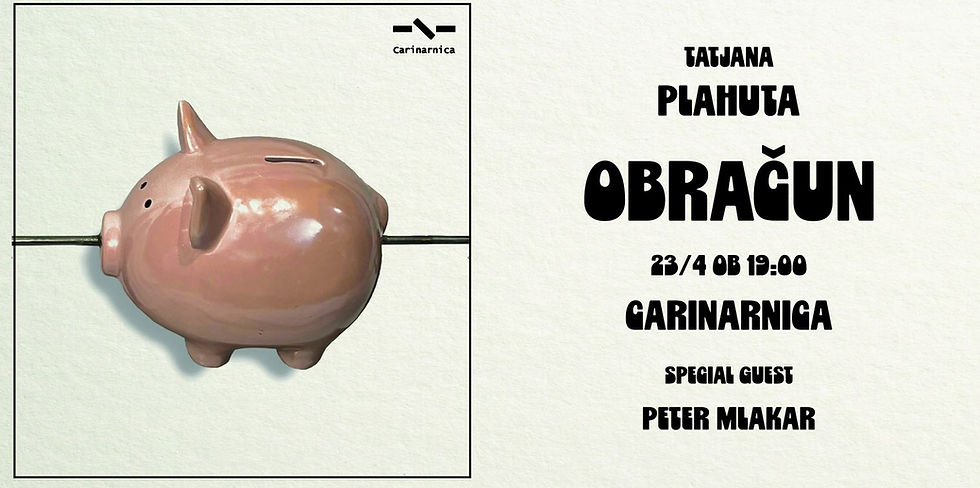
Exhibition: TATJANA PLAHUTA: Obračun

23. 04. 2026
At exhibition OBRAČUN, the star of the show was the receipt—that piece of paper we encounter at every turn and usually just crumple up and throw away. A receipt is a document of purchase, a companion to consumption, and a small reminder that nothing comes for free.
In the exhibition, receipts appear in a playful, almost childlike guise: they are cut into little squares, just like the ones we used to make from napkins in elementary school. Like snowflakes—each one is different. This everyday paper proof that we’ve spent some money again surprises us this time with a delicacy reminiscent of lace. But this beauty is ambiguous: it is both a mockery of the consumerist ritual and an acknowledgment of our own precarious existence.
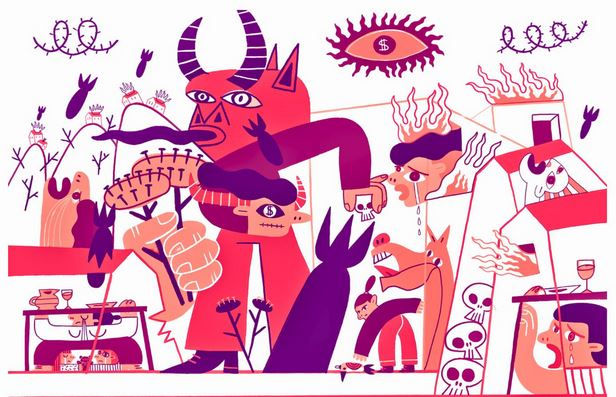
Can the value of our lives also be assessed? Is our body a product, is our work? How much do we (still) have in our account, what kind of pay do we expect, and what awaits us in the future? When we confront our own (in)worth, we look out at society: we see the flows of production and consumption, and the wholesalers jingling with money and chains. Do we really need scented toilet paper, crystal cat litter, and ripe avocados from the other side of the world? How do we step out of the fruit-and-yogurt revolution?
The Carinarnica space is a unique monument to the crossing of borders, where we once flocked to consume—to buy products that were unavailable here. This practice also reflects a part of our recent history. Today, we no longer have to cross the border for jeans, which we once secretly wore over our existing pants to avoid the customs officers’ accusations. From today’s perspective of abundance—a world where products are mass-produced so we can buy them quickly and discard them even faster—this small act of border dissidence may seem somewhat misguided.
The accumulation of receipt upon receipt on large canvases creates a pattern that can expand endlessly. OBRAČUN is therefore conceived as a single large image—repetitive, monotonous, yet always different in its details. Each receipt carries its own story of a trans-action.
The opening of the exhibition was accompanied by a talk by philosopher Peter Mlakar.
Tatjana Plahuta (1978) holds a degree in history, works as a documentary screenwriter, and is a self-taught visual artist. She translates personal and social experiences into works that invite reflection through humor and irony.